Bushfire recovery support and resources now available for land managers affected by the Deep Creek and Nangkita fires.

Successful revegetation
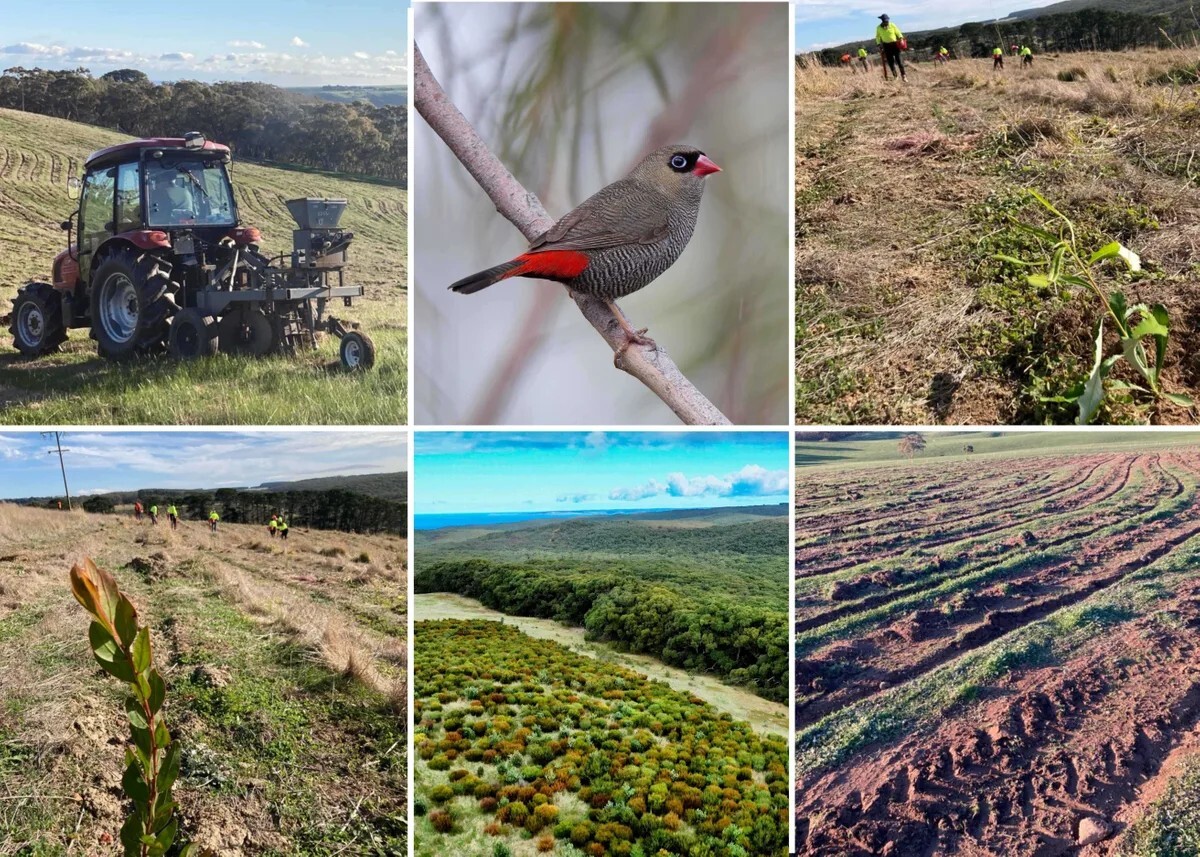
Restoring native vegetation is a great way to improve soil health, protect waterways and support local wildlife.
Whether planting paddock trees, creating a shelterbelt, protecting native vegetation, or replanting a creek line, revegetation boosts biodiversity, reduces erosion and enhances water retention.
These efforts not only benefit the environment but also improve long-term land productivity and resilience, making it a valuable investment for your property’s future.

5 steps to a successful revegetation project
Managing revegetation doesn’t have to be overwhelming. In our Five steps to thriving revegetation guide we've simplifed the process to help you plan and carry out a successful project. When done right, revegetation is one of the most rewarding ways to improve your land.
Plan to succeed
A good revegetation project starts with a clear plan. Take the time to think about your site, your goals, and how you’ll approach the work.
Considerations
- Plant orders: plants may need to be ordered at least 9 months in advance.
- Fencing costs: fencing to keep kangaroos out or buying tree guards can cost more than the plants themselves.
- Site preparation: if you’re using direct seeding, you may need two years to control weeds.
- Water access: you may need to water plants for several summers, especially if the site is very dry.
Design your revegetation
A successful revegetation project relies on thoughtful design. The following are some important things to consider:
Define your purpose
Knowing why you’re planting will guide your decisions about plant types, numbers and placement. Your revegetation project might aim to:
- Create or expand native vegetation for biodiversity and weed control
- Establish a wildlife corridor
- Plant scattered paddock trees
- Provide shelter for livestock or crops
- Support specific native wildlife
- Restore vegetation around a watercourse or dam
Map your site
Mark out your revegetation area on a map. This helps with planning, estimating plant numbers and tracking progress.
Choose your planting method
Select a method that suits your site, scale and resources:
- Tubestock planting
- Machine direct seeding
- Hand direct seeding
Work out your area and plant numbers
The number and of variety of plants required for your project is critical to accurate project budgeting of finance, time and labour. You will need to identify your preferred plant species, their planted spacing
requirements, and total number based on the size of the planting area to be revegetated.
Select suitable native species
To find out which native plants once grew at your location, use NatureMaps to look up your area’s vegetation community type. If your property includes a range of features such as hilltops, slopes or creek lines, you may find more than one vegetation community type.
Once you have the vegetation code, download the fact sheet and plant list. Many of these plants will be available from your local native nurseries.
Order plants and seed
Plan ahead — order your plants or seed well in advance to make sure you get what you need when planting time comes.
Prepare for planting
Good preparation of your site can make all the difference to the success of your revegetation project.
Protect your plants: Young seedlings are an easy target for rabbits, deer, kangaroos and livestock. Plan for fencing or plant guards to protect them. Fencing works well for larger areas, while guards are better for smaller plantings or scattered trees.
Choose the right planting time: In most cases, plant between May and August after early rains, giving seedlings time to establish before summer. For wetland or watercourse plants, it’s often better to plant when water levels are low.
Control weeds: Weeds compete with your plants for water, space and nutrients, and become harder to manage once your planting is established.
Retain and protect natural habitat features: Keep dead trees, logs, rocks and other natural features, as they provide important shelter and nesting sites for native wildlife.
Control pasture weeds and grasses: If your site is overrun with pasture weeds or grasses, control them before planting or they will smother young seedlings.
Manage pest animals: Rabbits, deer and other pest animals can damage your site before and after planting, so make sure you have a control plan in place.
Plant your site
There are different ways to plant your revegetation site. The best method will depend on your site, scale and resources.
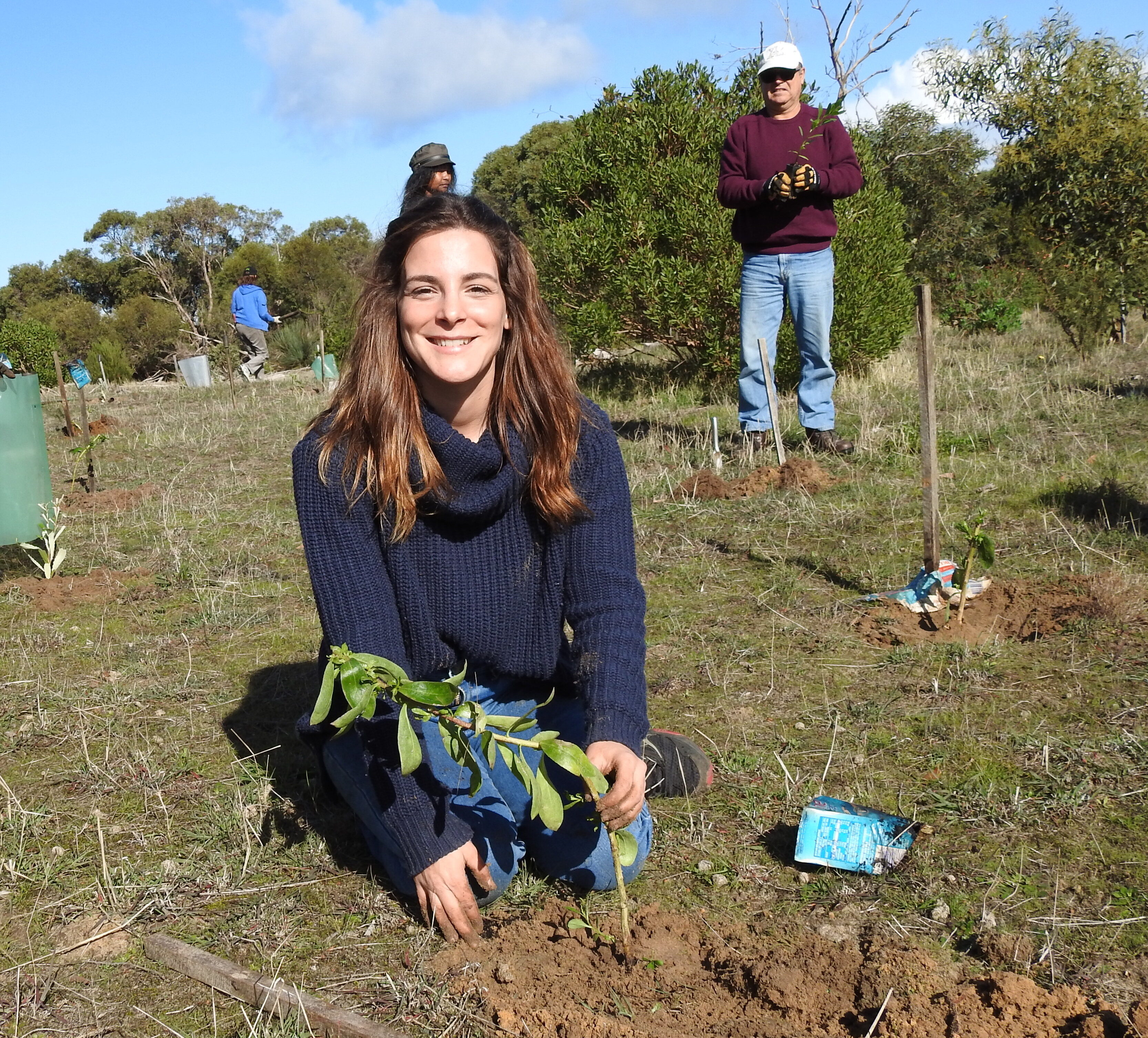
- Tubestock planting: Keep seedlings healthy and well-watered before planting. Aim to plant in autumn after early rains, and plan ahead to make sure you have time (and help) to get them in the ground.
- Machine direct seeding: Usually done by a contractor using specialised equipment. Some species may need to be added later with tubestock planting.
- Hand direct seeding: Prepare the site by controlling weeds and loosening the soil. Mix seed with sand or sawdust for even spreading, and lightly cover with soil. Protect seeds with branches to stop them washing away or being eaten.
Maintain, monitor, review and adapt
Keeping an eye on your site and carrying out regular maintenance will give your revegetation the best chance of success.
- Monitor your site: Regularly check plant growth, signs of grazing, water stress and weed levels. Use photo points to track changes over time and watch for increasing wildlife use.
- Water when needed: Seedlings may need regular watering, especially in dry conditions, for up to three years after planting. Plan your planting size based on available water.
- Control weeds: Ongoing weed control is vital, especially in the first few years, to stop weeds from smothering your plants or spreading further.
- Maintain fences and guards: Check and repair fences and plant guards regularly. Remove guards when plants are strong enough, and reuse them where possible.
- Infill planting: Fill gaps with new plants if needed, either by adding tubestock or waiting to see the results of direct seeding before topping up.
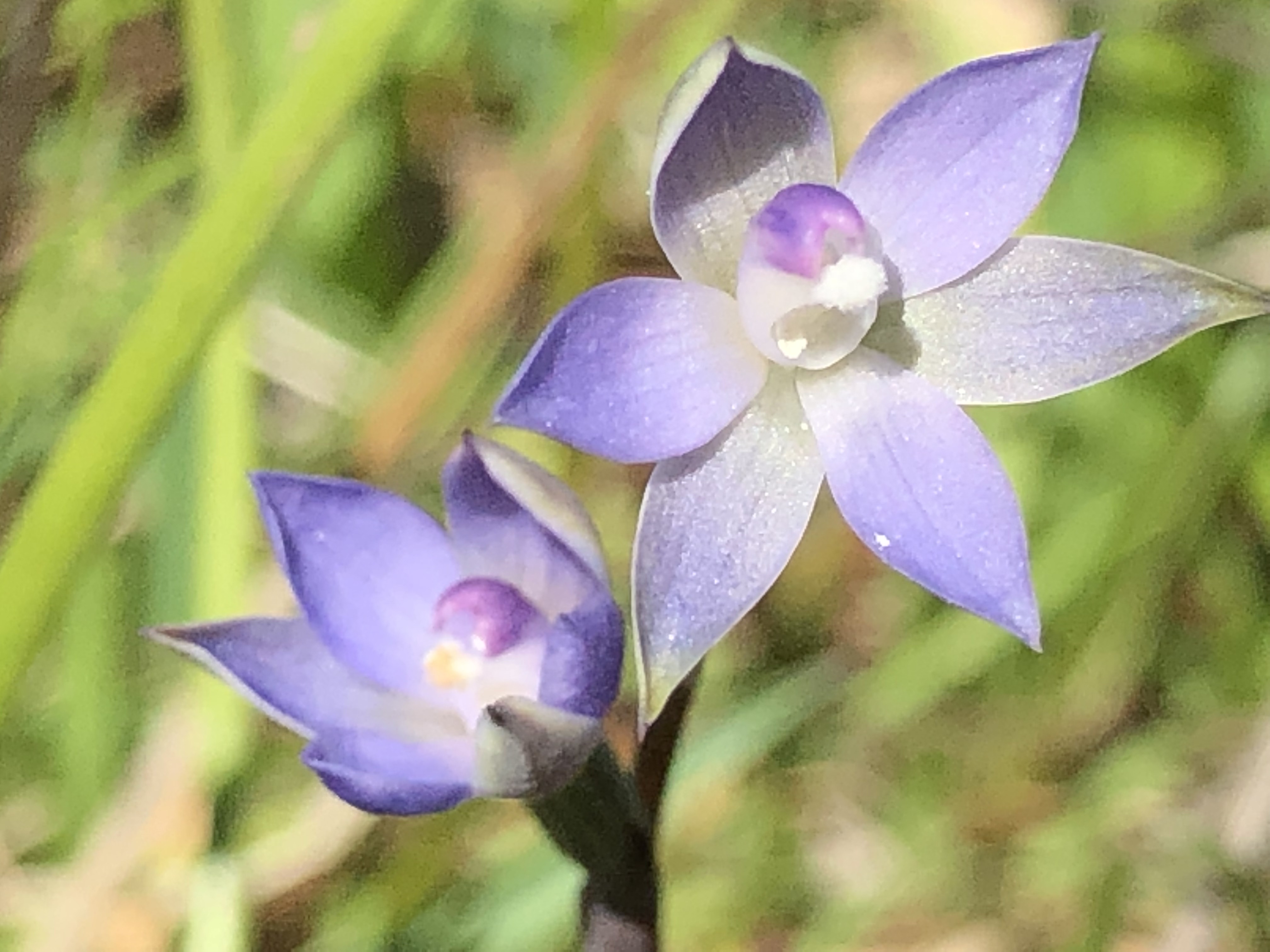
Find native plants for your area
Choosing the right native plants is important for successful revegetation. Find out what has grown in your area and where to buy local seedlings.
Download the revegetation guide
Ready ot tatke action? Our Five steps to thriving revegetation guide makes it easy to get started with practical advice you can follow at your own pace. Whether you’re managing a small patch or a larger area, the guide walks you through identifying issues, setting priorities and planning your next steps.
Use the Action Plan template to map out your work, track your progress and keep on top of seasonal jobs.
Download both and start making a difference on your property today.
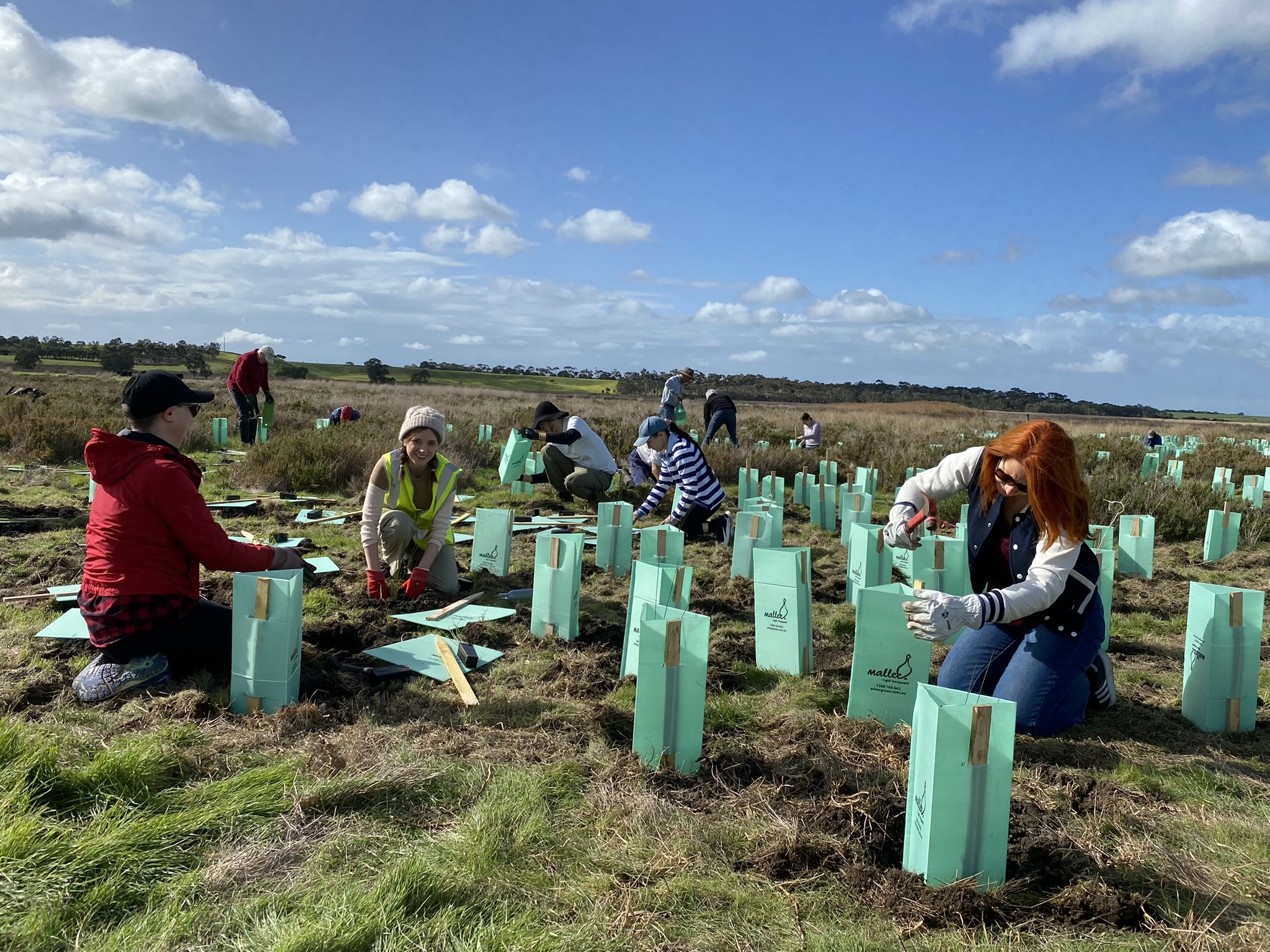
Protecting your plants
Tree guards and fencing are essential for protecting new plants from grazing animals, trampling and damage until they are well established. Choosing the right guard – and knowing when to remove it – will make the difference between success and failure in revegetation.
- Newly planted seedlings are soft, fertilised and highly attractive to stock, rabbits and kangaroos.
- Guards create a barrier against grazing and trampling.
- Smaller guards also provide a microclimate, protecting seedlings from frost and herbicide spray drift.
- Without protection, most new plants will not survive.
- For rabbits – use small cardboard or corflute guards with two bamboo stakes. These will not stop larger animals.
- For sheep, cattle, goats and kangaroos – use tall, strong guards built to withstand pushing, rubbing and climbing.
- Goats require tall, rigid guards that won’t collapse.
- Cattle need guards at least 2 m high, reinforced with four dropper posts. Barbed wire can be added to deter rubbing.
- For larger plantings, fencing off an area is often more cost-effective than guarding each plant. Always include a gate for access and watering.
- Creeks and dams should be fenced off from stock to protect both plants and water quality.
When to remove guards
Tree guards are temporary and should be removed once plants can survive without them.
- Cardboard or corflute guards – remove after about 12 months to prevent stunted growth.
- Heavy stock guards – may need to stay in place for up to 10 years, until trees are strong enough to resist rubbing and pushing.
- Always check regularly to make sure guards are not restricting growth.
Tree guards can be purchased ready-made (companies such as Arborgreen stock a wide range) or built from mesh and stakes. Ask your supplier for advice on the best designs for your property.
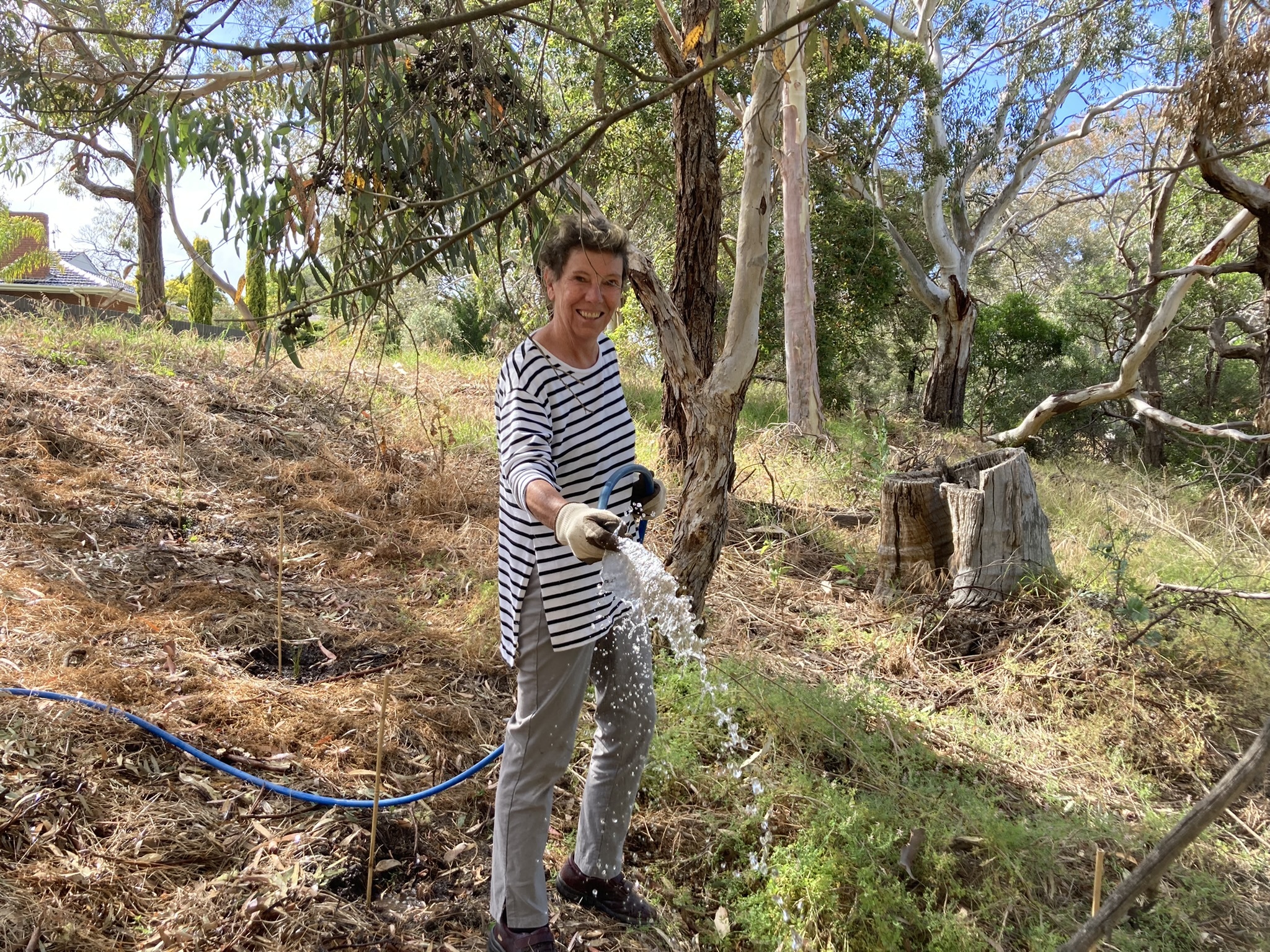
Watering your plants
If you’ve planted your seedlings following the steps above, they will be strong and resilient. They will still need some watering to get through their first summer and autumn.
- At planting: Water each plant with 5–10L, poured into the depression around it. Let it soak in well.
- Over summer: Check regularly. Water at least once a month, before any hot spells, and weekly in very hot or dry conditions.
- Through autumn: Continue watering as needed, depending on rainfall and seasonal conditions.
Ways to water:
- Hose (if plants are close to a tap)
- Backpack sprayer
- Vehicle-mounted fire unit
- Commercial dripper system
- Home-made dripper system: use a 20L drum with holes in the lid and handle, filled with water and laid on its side beside each plant. The water seeps slowly into the soil while you get on with other jobs.