Bushfire recovery support and resources now available for land managers affected by the Deep Creek and Nangkita fires.

Bushfire recovery support
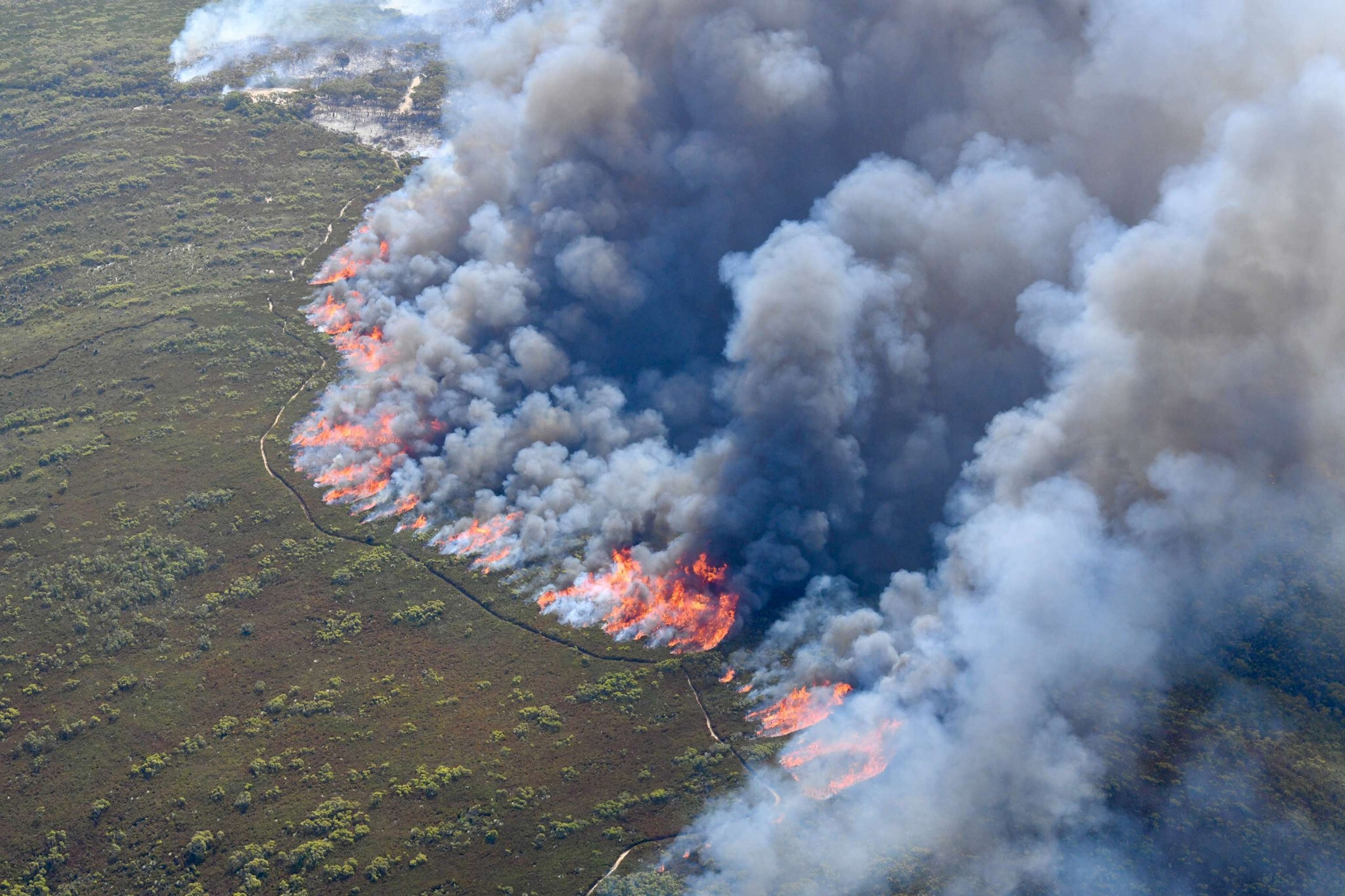
Recovering our landscapes after fire
Bushfires have had significant impacts across the Hills and Fleurieu, affecting people, Country, wildlife, native vegetation and working landscapes. For First Nations peoples, fire is deeply connected to caring for Country, with knowledge developed over thousands of years. Today, fire behaves differently due to climate change and changing land use.
Recovery takes time. This page outlines practical next steps to support land and property recovery, including managing burnt ground, livestock, water, soil, weeds, revegetation and gardens. Each section includes clear actions you can take now, with links to further guidance and local support.
If you would like tailored advice, our team is here to help please get in touch.
Grants for Deep Creek and Tooperang / Nangkita fire-affected landholders
Grants are now open for landholders ready to carry out fire recovery works, including stock water, erosion control, weed and pest management and fencing. Read the guidelines and eligibility criteria here
What to consider after a bushfire
Act early to protect bare soil.
Reduce traffic from livestock, vehicles and people on burnt paddocks to limit erosion and soil damage. Where possible, shift stock to containment areas or unburnt ground.
Burnt soil often forms a thin surface crust - keep this intact. The soil underneath may be loose and vulnerable to wind and water erosion.
If pasture is singed but still present, trial a small area first. Light irrigation (where available) can help you assess recovery. Some soils may become temporarily water repellent after fire — this usually improves with rainfall and regrowth. Compost or mulch can help protect the surface while pastures re-establish.
Start small and monitor how your ground responds before scaling up treatments.
Get support:
Contact our team to discuss ground recovery options or arrange a property visit.
Move stock off burnt paddocks as soon as possible.
Keeping livestock off burnt ground will improve the rate of recovery for your land and pastures. Consider setting up a temporary containment feeding area to reduce pressure on fragile ground and make feeding, watering and monitoring easier.
Key actions
- Raise hay off the ground (use troughs or feeders) to reduce ash ingestion.
- Monitor stock closely - some health impacts appear weeks later.
- Plan supplementary feeding with advice from a livestock specialist.
- Assess early whether to agist or sell if feed, water or welfare cannot be maintained.
Feeding in containment areas also helps reduce weed spread from donated hay.
Further information for fire-affected grazing properties
- Meat and Livestock Australia Bushfire Recovery ELearning: This training provides the essential information you need as a livestock producer to recover from a bushfire.
- Urgent livestock assistance through the PIRSA 24-hour hotline: 1800 255 556
- Livestock assessments for injured livestock
- Livestock SA / Primary Producers SA fodder & agistment register: 8297 2299 (Mon–Fri)
- Containment area fact sheet
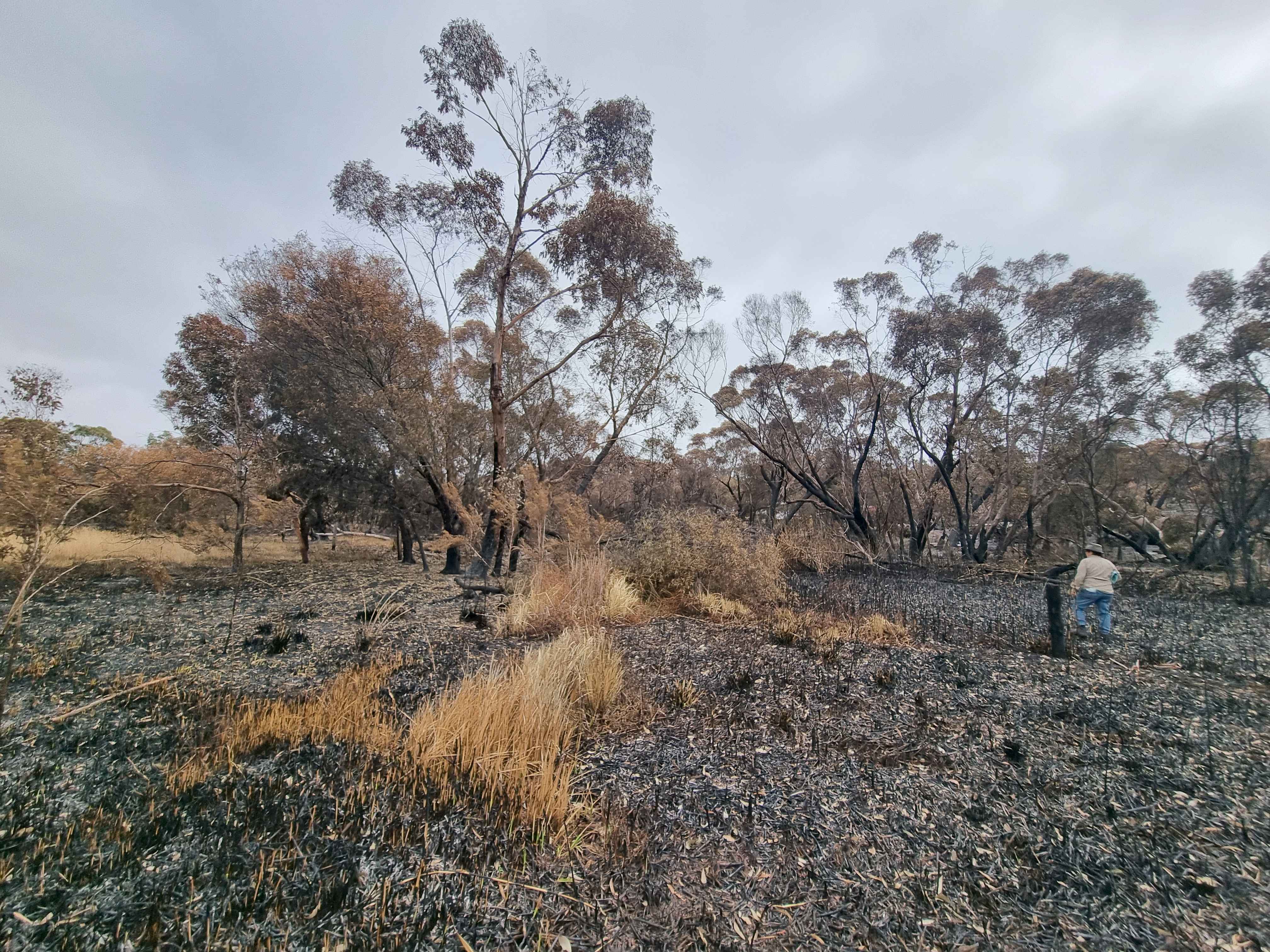
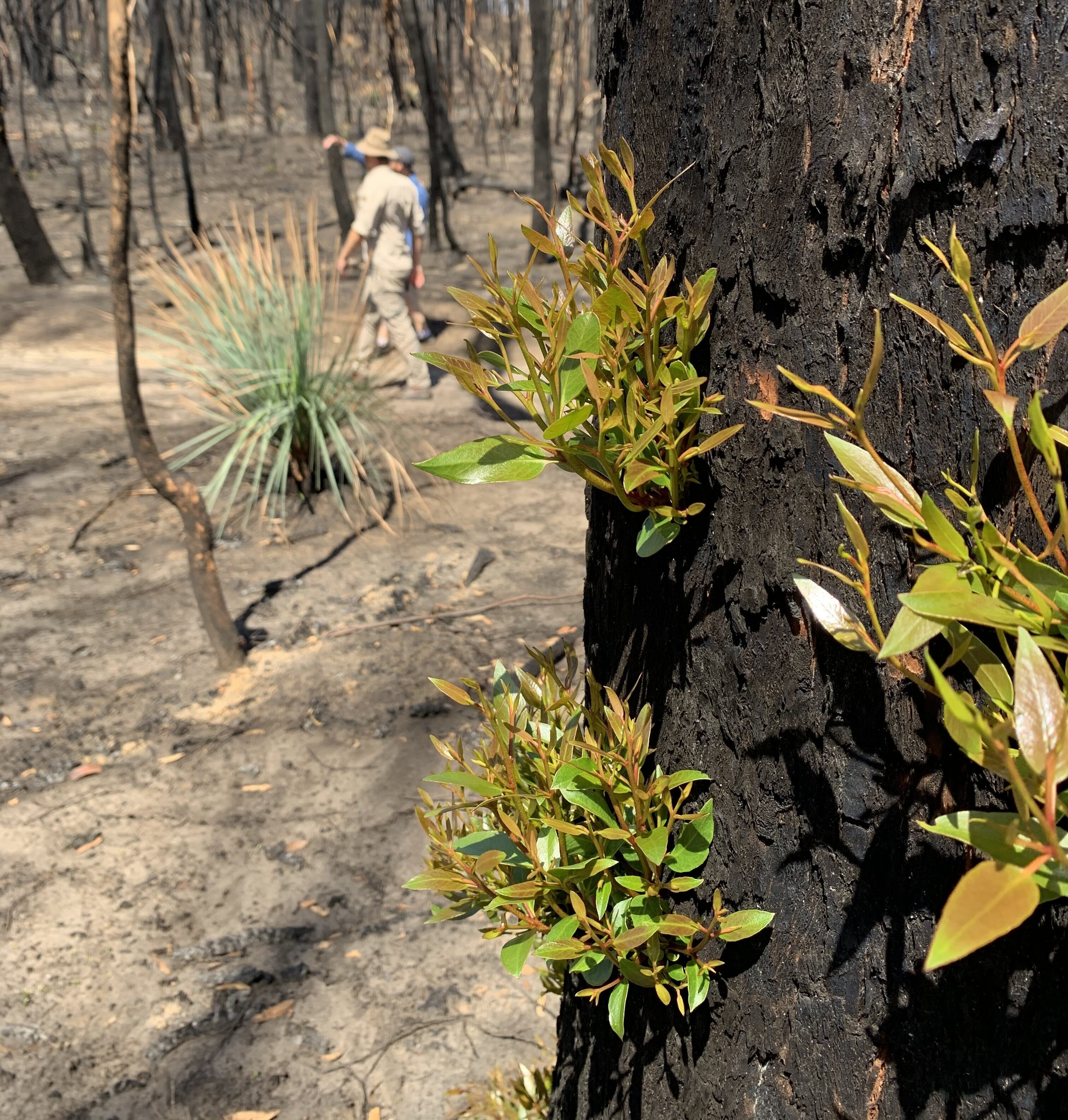
Pause before removing burnt trees.
Many native species recover naturally, even if they appear dead. Give trees time to reshoot before deciding to remove them. Some native species will re-shoot within five weeks of being burnt.
Standing dead trees (especially those with hollows) provide critical habitat for birds, microbats and other wildlife. Retaining trees where safe to do so supports biodiversity and can also reduce erosion in agricultural landscapes.
Remove only those trees that pose a clear safety risk to people, stock or infrastructure.
Learn more:
Find out more about post-fire tree recovery here.
Inspect dams and creeks after rainfall.
Ash and exposed soil can wash into waterways, reducing oxygen levels and increasing the risk of algal blooms.
Immediate actions
- Check water regularly for odour, colour changes or algal growth.
- Install temporary sediment controls upslope of dams and waterways.
- Maintain ground cover as quickly as possible to reduce runoff.
Sediment fences can be constructed using star droppers, coir logs, hay bales or mesh. Design will depend on slope and soil type.
Some sediment works in bushfire-affected areas may not require a Water Affecting Activity Permit. Refer to the Current Recommended Practice for Sediment Control within a Watercourse in a Bushfire-Affected Area.
Healthy creek lines can help moderate fire behaviour and protect water quality — consider long-term creek restoration as part of recovery.
Further guidance:
- Managing contaminated farm dams Post-bushfire water quality in farm dams and creeks'
- Caring for creek lines to reduce bushfire risk
Act quickly to reduce grazing pressure on regenerating areas.
After fire, reduced ground cover and food shortages can concentrate kangaroos and rabbits in recovering paddocks and revegetation sites.
Practical steps
- Use temporary fencing to protect vulnerable areas.
- Monitor grazing pressure on new pasture and seedlings.
- Implement early rabbit control (baiting, warren ripping and follow-up).
Early intervention helps protect soil stability and reduces long-term control costs.
Learn more:
Visit our pest animal page for property-specific options.
Start small and rebuild gradually.
Even a few pots or a small planting area can mark the beginning of recovery.
Assess how fire affected your garden — what burned, what survived, and how soil and ash have changed conditions. Test soil before replanting, especially around fruit trees or productive areas.
Plan before planting:
- Decide what you want from your garden (shade, cooling, habitat, food, fire-safe).
- Group plants by watering needs.
- Prioritise species suited to your soil and local climate.
Resources:
Test before you treat.
Fire can alter soil nutrients, pH and structure. Before applying fertiliser or amendments, undertake soil testing to understand what has changed.
Landscapes Hills and Fleurieu supports post-fire soil testing to help landholders tailor nutrient correction to grazing, cropping or horticulture systems. Contact us to discuss what soil testing support is available.
Soil recovery actions
- Reduce erosion through ground cover and sediment control.
- Use containment feeding areas to protect soil structure.
- Apply amendments (lime, gypsum, compost) based on test results.
Learn more:
Act early while weeds are small.
Many weeds are ‘fire responsive’ geminating in large numbers after fire and quickly establish in the bare ground.
Post-fire conditions often make weed control easier and more effective in the long term, controlling before plants flower and drop seeds can dramatically reduce years of follow-up weed control.
Practical steps
- Identify and prioritise high-risk species.
- Control weeds before they set seed.
- Monitor containment feeding areas for new infestations.
Further guidance:
- Download the “Five steps to effective weed control” guide for practical advice or contact your local Stewardship Officer for advice tailored to your property.
Support natural regeneration first.
Allow time to see what regenerates naturally before replanting.
Where planting is needed:
- Select local native species suited to soil and rainfall.
- Protect seedlings from grazing.
- Mulch and water strategically during establishment.
Revegetation helps stabilise soil, protect waterways and provide habitat as landscapes recover.
Learn more:

Book a bushfire recovery property visit
After a bushfire, our Stewardship Officers can visit your property to provide advice and guidance on land recovery. They can help you think through options for watercourse repair, revegetation, weed control and restoring habitat for wildlife. Every property and situation is different, and support is available at a pace that works for you. Please email or phone us to arrange a visit.
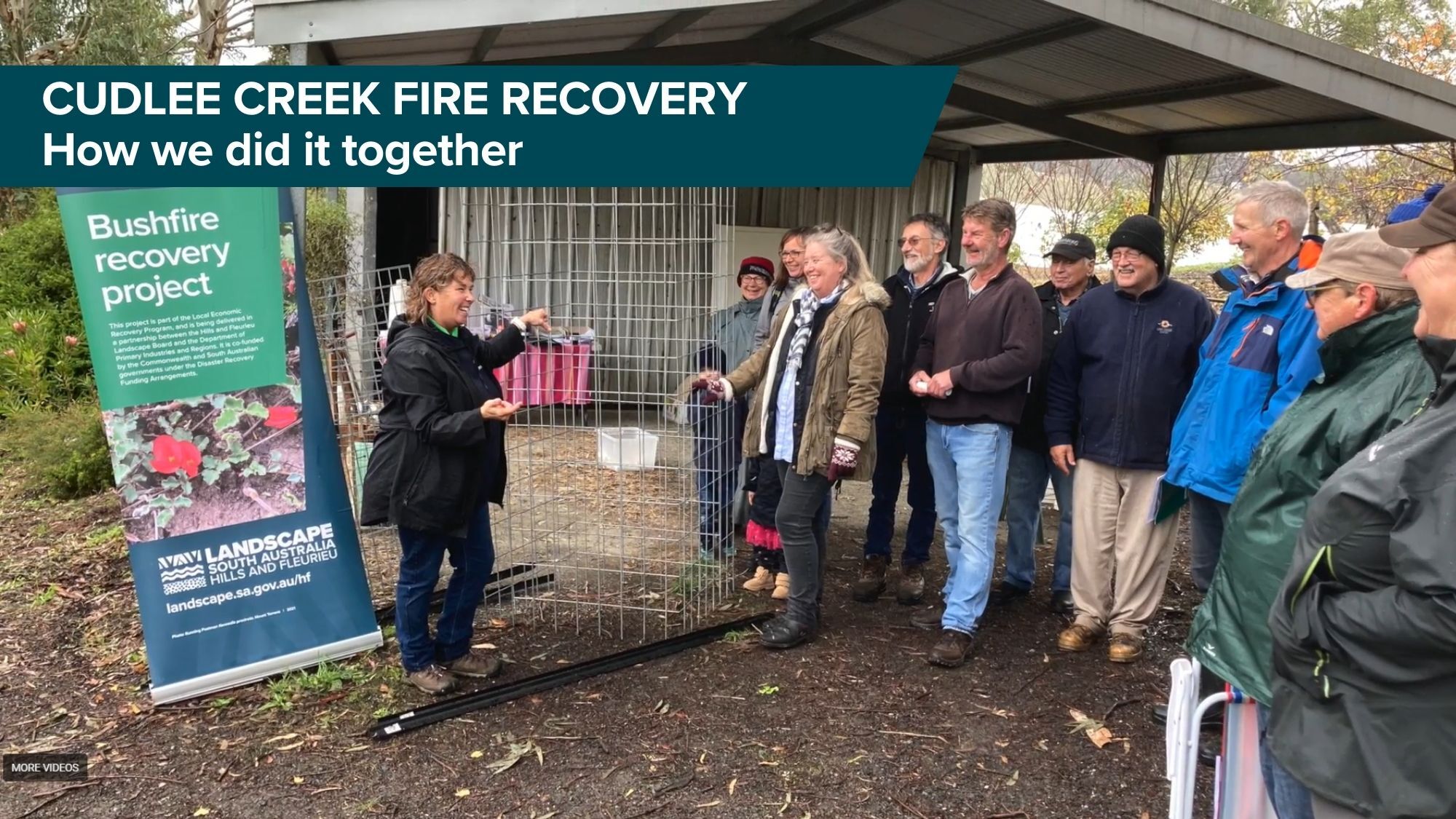
Case study video: Cudlee Creek Fire Recovery


Useful resources
-
 Bushfire recovery and biodiversity fact sheet
-
Bushfire recovery and your farm fact sheet
-
Controlling woody weeds after fire fact sheet
-
Managing rabbits after fire fact sheet
-
 State government emergency response services
-
Caring for your creek lines to reduce bushfire risk
-
Bushfire Recover Online Training Module - produced by Meat and Livestock Australia
-
Native trees in burnt areas fact sheet
-
Clearing native vegetation along fencelines
-
Hills and Fleurieu Emergency Preparedness Response Plan
-
Video: Post fire woody weed control
-
Managing rabbits after fire fact sheet
Acknowledgement:
The Nangkita/Tooperang and Deep Creek Bushfire Recovery Grants are funded through the Landscape Priorities Fund and delivered by the Hills and Fleurieu Landscape Board