Bushfire recovery support and resources now available for land managers affected by the Deep Creek and Nangkita fires.

Wild rabbits
Protecting our region from wild rabbits
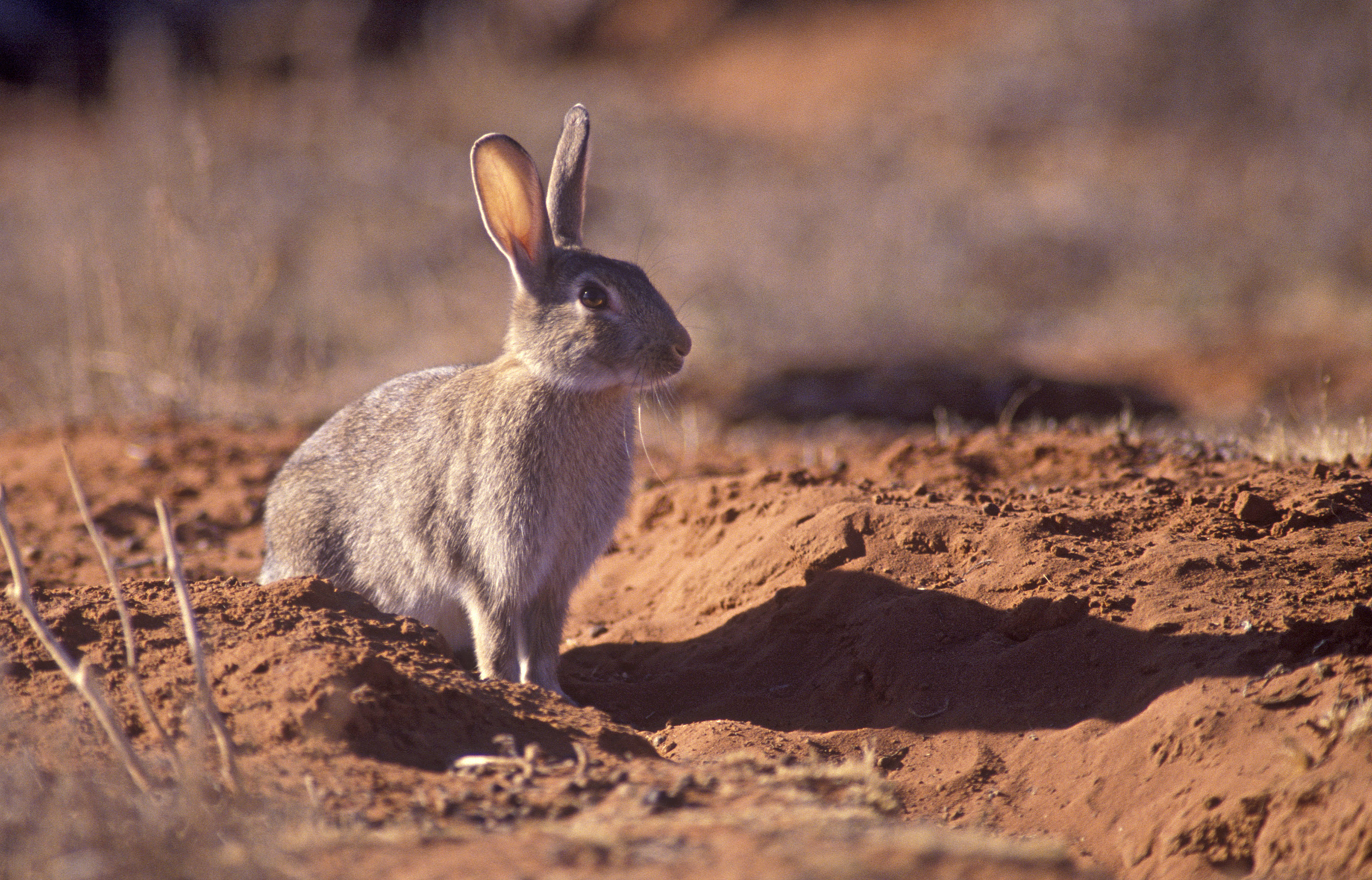
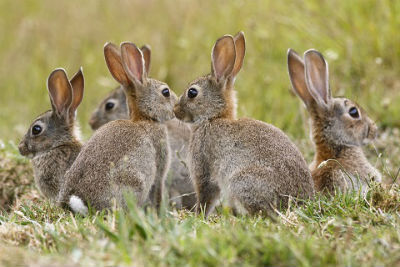
Wild rabbits are an invasive species and pose significant threats to agriculture and the environment in the Hills and Fleurieu. They destroy gardens, native vegetation and compete with stock and native animals for food and habitat.
Under the Landscape South Australia Act 2019 all landholders are responsible for controlling wild rabbits found on their properties.
Managing wild rabbits on your property
Using a range of methods and coordinating with your neighbours to control rabbits over the summer season is your best chance of lasting success. Control methods include:
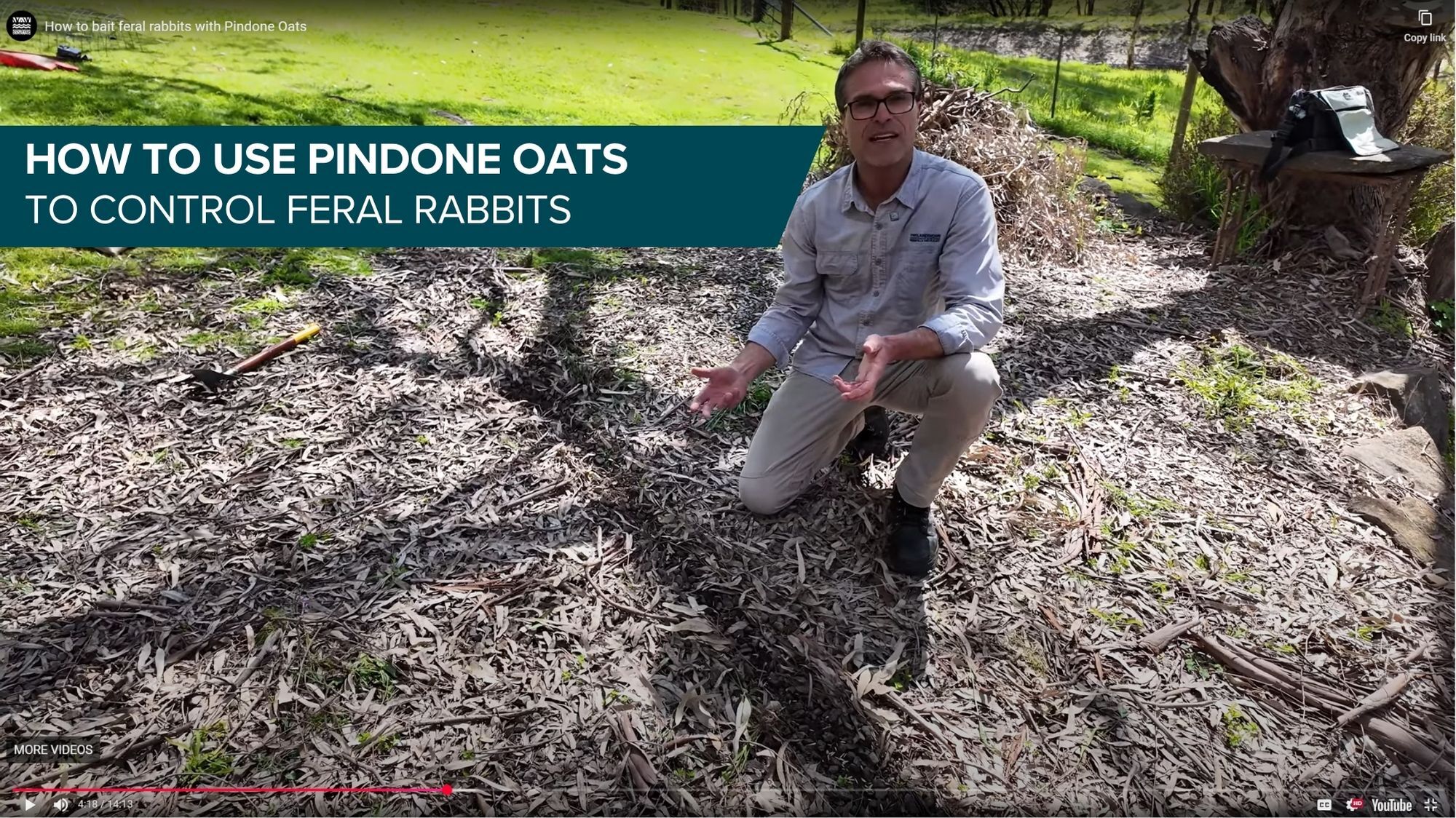
Baiting with pindone treated oats
Pindone oats can be very effective for controlling rabbits on your property, especially during the wetter months. Like all baits, they must be used carefully to protect native wildlife, pets, and livestock.
Tips for safe and effective use:
- Pre-feed with plain whole grain oats (not rolled or breakfast oats) for a few days to train rabbits to a new food source and check that non-target animals aren’t accessing it.
- Bait in the evening when rabbits are most active.
- Avoid baiting near native vegetation or areas that may shelter small native animals. Leave a buffer of at least 100 metres.
- Multiple feeds are needed – rabbits must eat baited oats several times over 10–12 days for Pindone to be effective.
- Remove uneaten bait the next morning and dispose of it safely, such as by deep burial. This ensures the baits won't be eaten by birds or other daytime feeders.
- Stop baiting immediately if native animals access the bait.
- Use bait stations or tunnels in small areas or to limit access to non-target species.
- Dispose of dead rabbits by burying them at least 500 mm deep.
If you’re ready to get started, Pindone oats are available from local hardware, rural supply and fodder stores across the region.


Tree guards and fencing
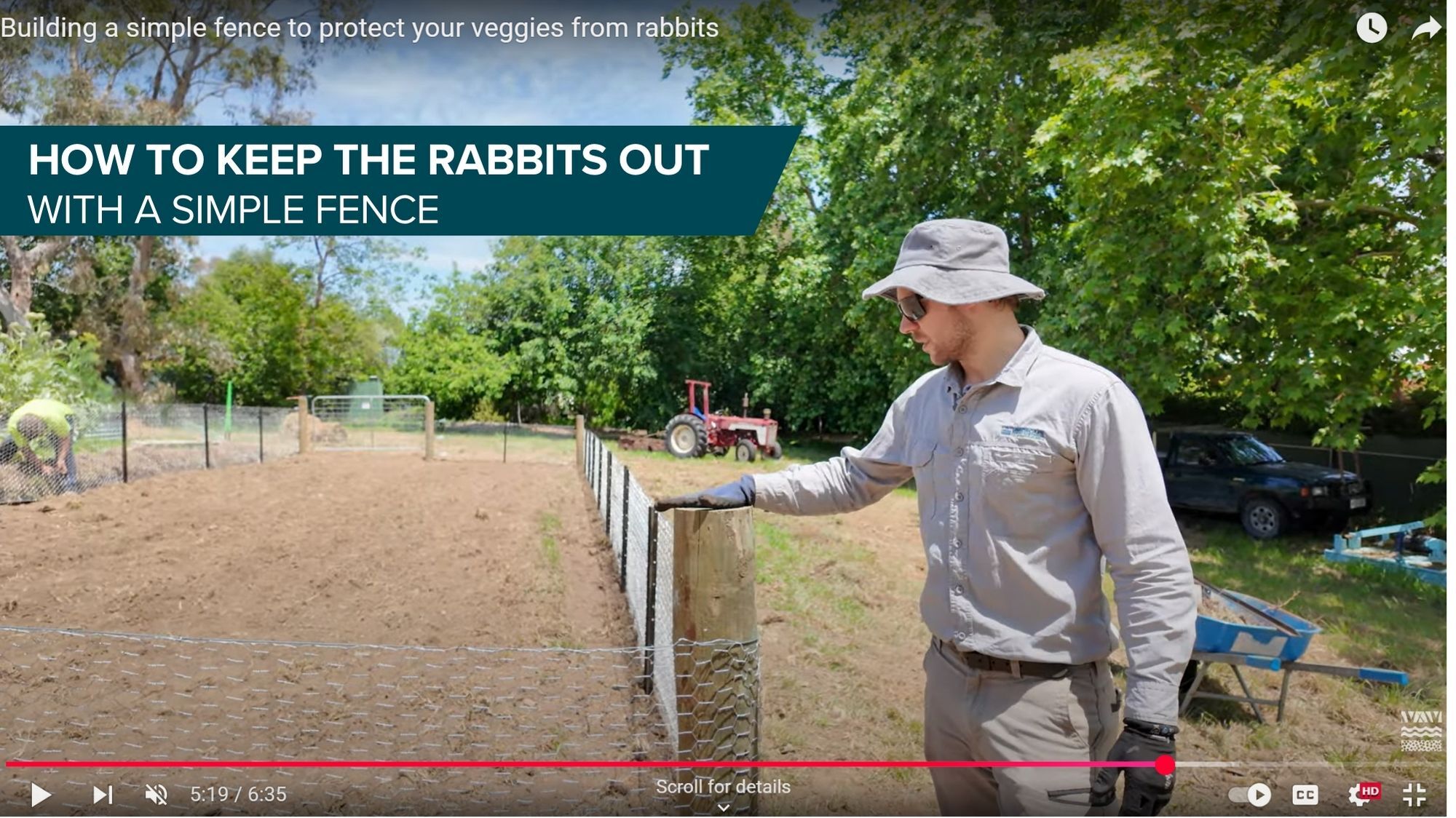
Keep your plants and gardens safe and protect your vegetables from wild rabbits with a simple and effective fencing solution. Watch the video below to learn tips and tricks for setting up a strong barrier that will last.
Clear rabbit hiding spots
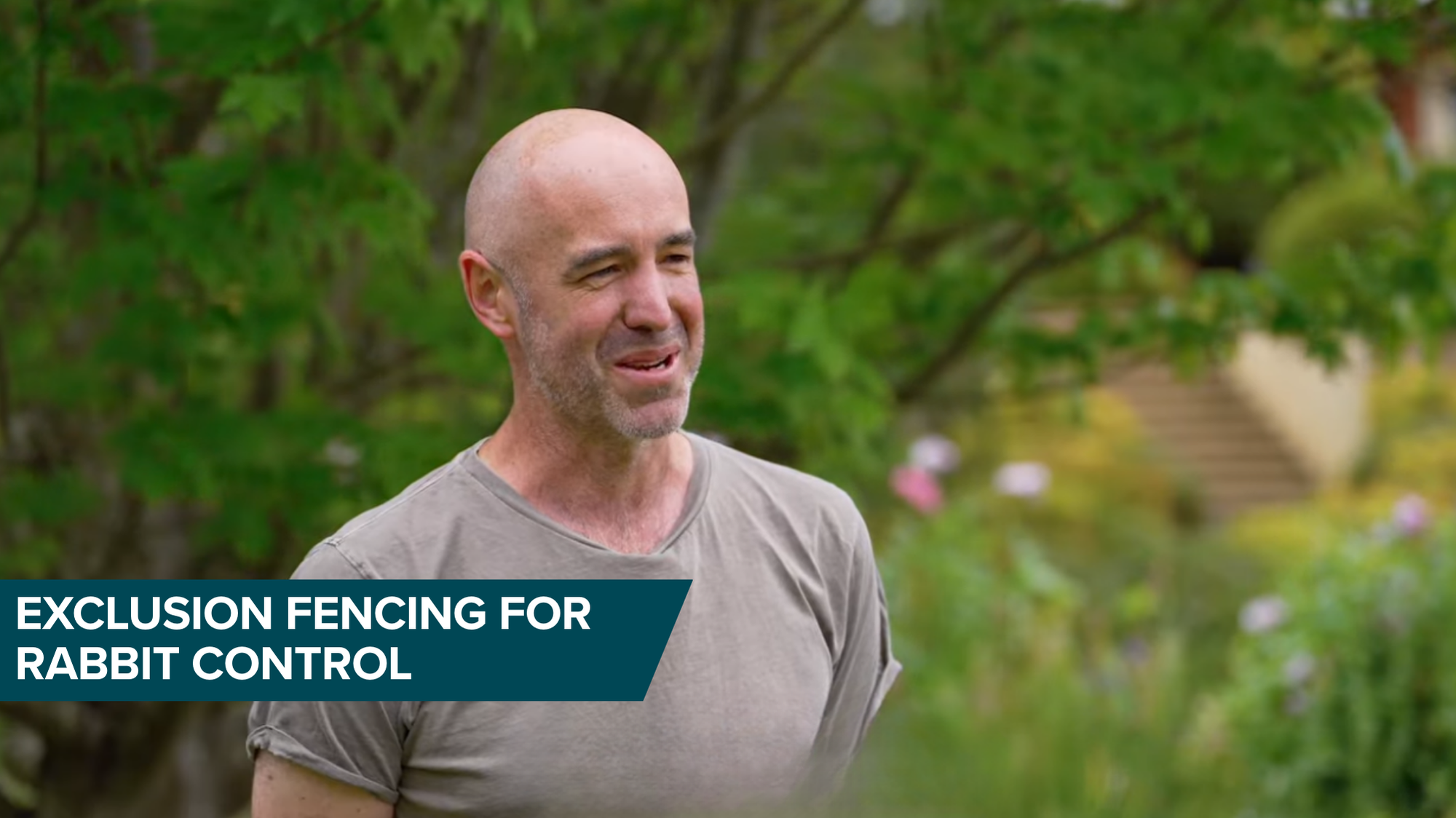
Rabbits rely on piles of debris and other cover for shelter and protection. Cleaning up green waste, fallen branches, prunings, stacked pallets and similar items reduces places for rabbits to hide and breed. Removing these shelters makes follow-up control measures, such as warren destruction, much more effective.
Collapse or destroy warrens
Collapsing warrens is a simple and cheap way to get longer term control rabbits on your property. Once warrens are collapsed, rabbits are less likely to return to your property. Collapsing of warrens is best done straight after a baiting program when rabbit numbers are low.
Fumigation
Fumigation of warrens can happen before or after a warren has been collapsed and involves the use of Phostoxin tablets by an accredited pest contractor. When Phostoxin tablets come into contact with moisture it will release a phosphine gas that will flow through the whole warren complex. For this reason, all warren entrances must be detected and blocked to allow for effective control. This may mean clearing the area of debris and woody weeds prior to the contractor’s arrival or paying the contractor to clear the area. If the warren is under a building or structure. Make sure the floor structure is completely intact to ensure gas doesn’t escape.
Fumigation of warrens is best done straight after a baiting program when rabbit numbers are low.
Baiting with RHDV K5 (calicivirus) treated carrots
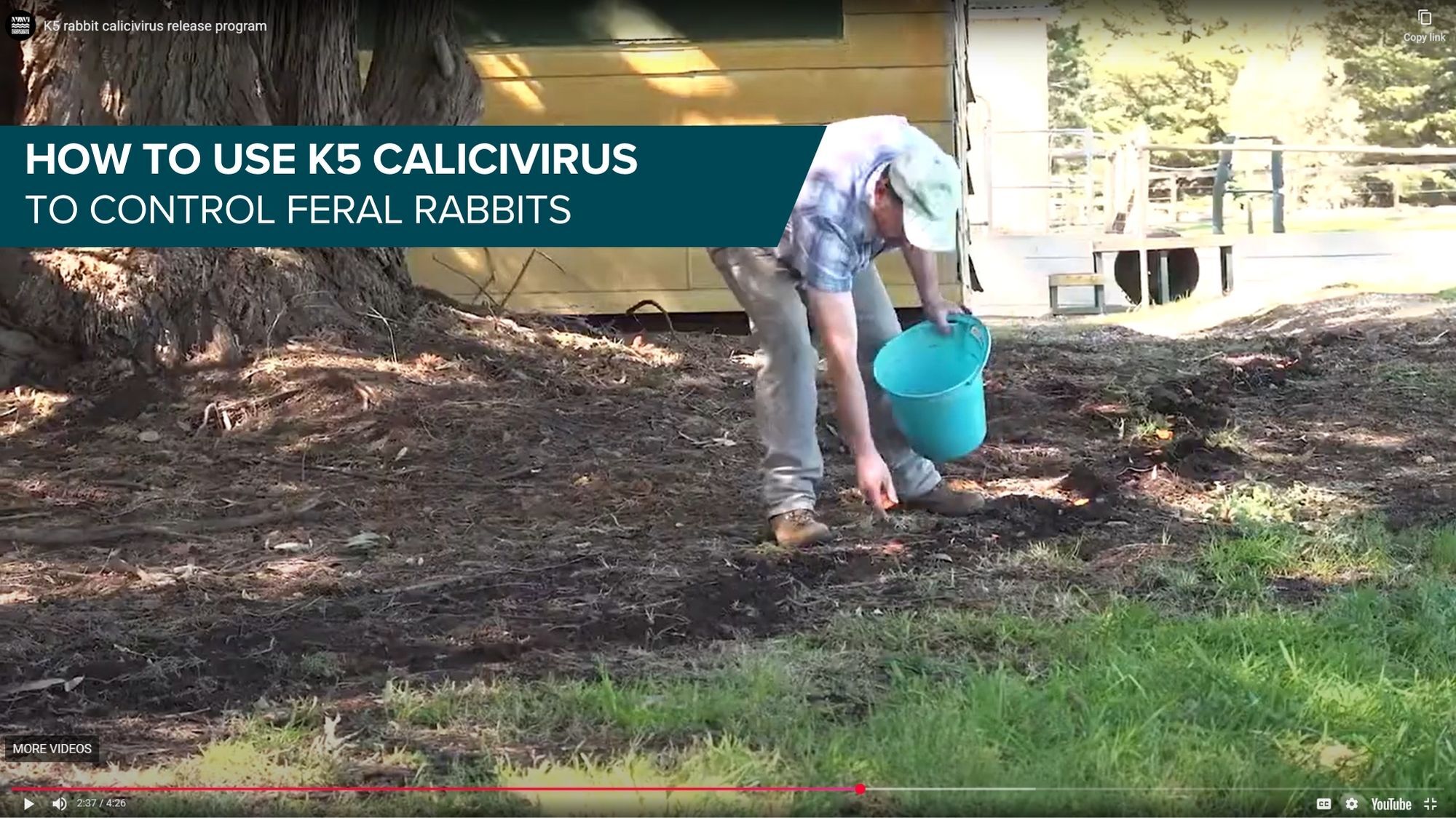
K5 calicivirus is one option for reducing rabbit numbers and can be a useful part of a wider rabbit control program. It can be effective on smaller land parcels (under 1000 square metres) where baiting is not an option or for landholders who prefer not to use baits such as Pindone.
The virus only affects rabbits, so there are no off-target risks when using K5-treated carrots. However, its effectiveness can vary (20–80%) depending on existing immunity in the rabbit population. The virus also tends not to move very far from the release site.
Please be aware that pet rabbits are susceptible to RHDV K5 and should be vaccinated. Speak to your local vet for advice.
To access K5 calicivirus carrots
The Landscapes Hills and Fleurieu will again be making K5 calicivirus carrots available in 2026. This program is also offered to the six councils in our region, with details about their release sites available on council websites.
If your property is smaller than 1,000 square metres or if you are not comfortable using poison, K5 Calicivirus may be an appropriate control method.
Register your attendance at one of our distribution days via Humanitix.
Attend the distribution day to pick up your carrots.
Baiting with pindone treated carrots
Dyed, green, Pindone-treated carrots are one tool to help control rising rabbit numbers in the region. When using Pindone, it’s crucial to minimise the risk to non-target animals.
To reduce off-target impacts, we strongly encourage you to:
- Pre-feed at least three times with unbaited carrots. This trains rabbits to eat a new food source, helps you estimate how much bait you’ll need, and allows you to check that native animals are not eating the carrots. Trail cameras are useful for monitoring. Watch a video about how to set up a wildlife trail camera here.
- Avoid baiting in native vegetation. Leave at least a 100 m buffer around native or dense exotic vegetation that could shelter small native mammals.
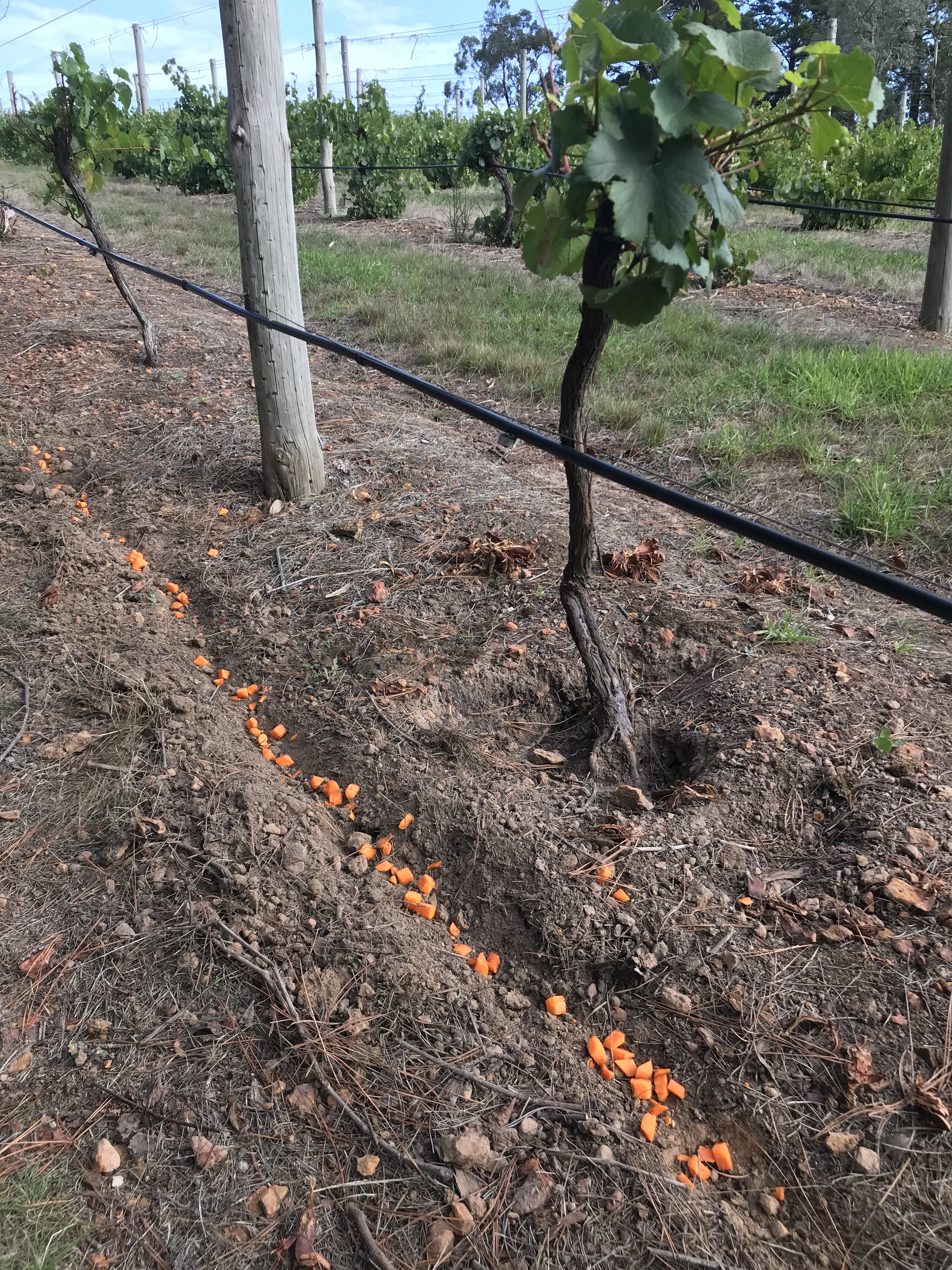
- Lay baits in the evening on freshly scuffed trails, as rabbits are attracted to disturbed soil. Pick up any uneaten bait the next morning and bury it deeply.
- Use tunnels or bait stations to limit access by non-target species. Small rabbit numbers can be controlled with a covered tunnel or bait station.
- Dispose of dead rabbits by burying at least 50cm deep.
- Stop immediately if native animals are seen eating bait and remove all remaining bait.
For Pindone to be effective, rabbits need multiple baited feeds over 10–12 days. If a pet eats small amounts of Pindone-treated carrots, it’s unlikely to be fatal, but take your pet to a vet immediately. Vitamin K1 is the antidote.
Access to pindone treated carrots
Pindone-treated carrots are available for purchase at our rabbit bait distribution days that run across Summer and Autumn.
We are committed to safe, responsible and effective control of rabbits. We take the protection of wildlife very seriously and support our community to do the same. All land managers that purchase pindone-carrots from Landscapes Hills and Fleurieu must complete an online training module annually to ensure baits are used in a manner that minimises impacts on native wildlife.
To participate in our distribution day please follow the steps below.
Complete the mandatory online training module - Safe and successful use of Pindone for rabbit management
On completion, you will be sent a link to register your attendance at one of our distribution days. You must register at least five days before the distribution day.
Buy regular carrots and begin pre-feeding at least 15 days prior to attending the distribution day. This step trains the rabbits to eat the carrots, helps you estimate how much bait you’ll need and importantly allows you to check that native animals are not eating the carrots.
Attend the distribution day to pick up your pindone-treated carrots and begin baiting.
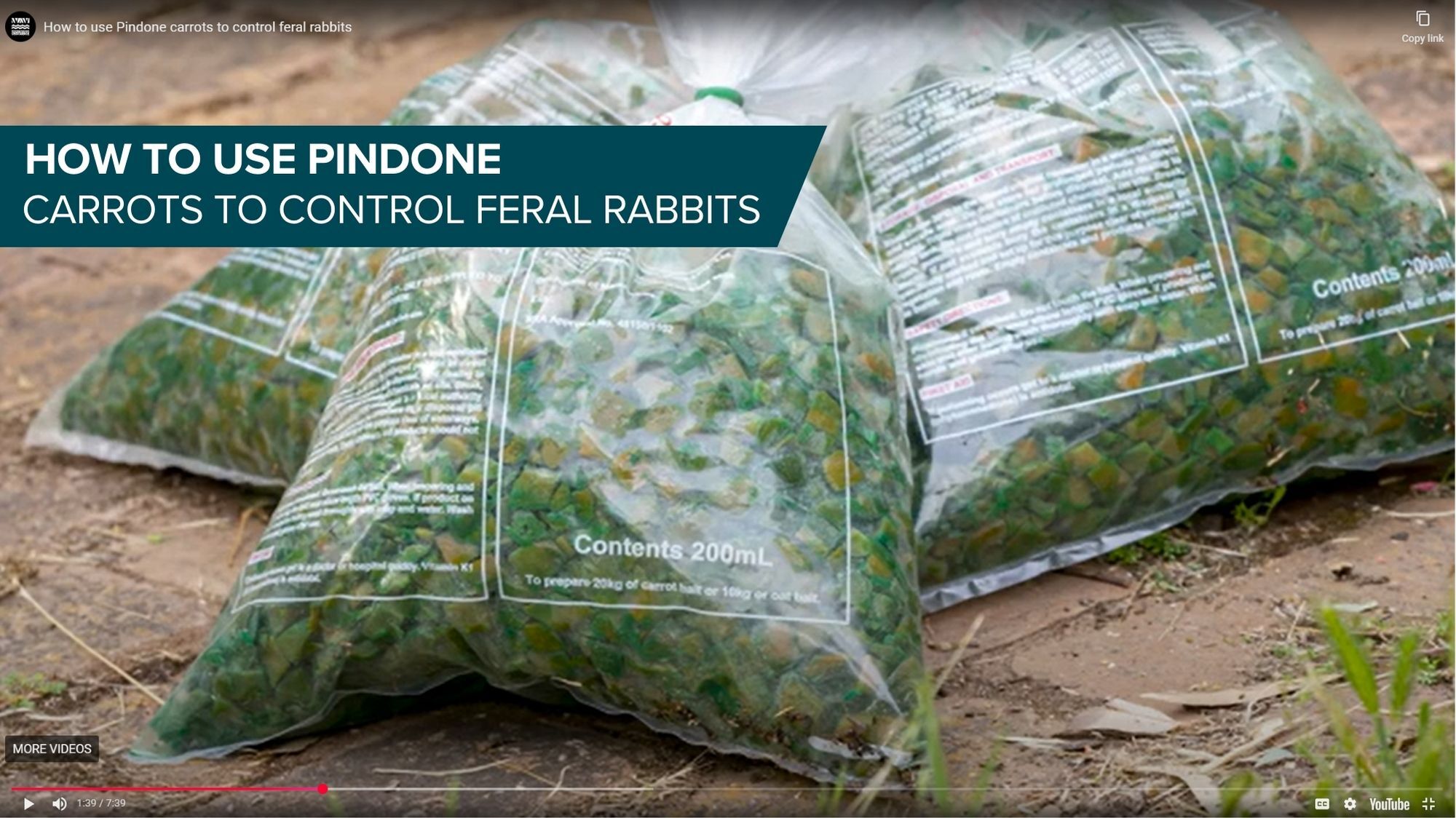
Please note we no longer sell pindone-treated carrots directly from our office - they will only be available from our distribution days. This approach ensures that rabbits are baited across multiple properties at the same time and enables more effective rabbit control and better environmental outcomes.
All bait active ingredients sold by Landscapes Hills and Fleurieu are regulated by the Australian Pesticides and Veterinary Medicines Authority. Landscapes Hills and Fleurieu supports safe, responsible, and effective rabbit control. If you’re unsure about the humaneness of a control method, seek advice from the RSPCA.
Using baits safely and effectively
Using Pindone responsibly is about more than just managing rabbits. It’s about caring for the animals, plants, and ecosystems that share our region. When Pindone is used correctly, it targets rabbits while minimising risks to native wildlife, pets and the wider community. By following safe practices, we can make sure that control programs are humane, effective and protect the natural environment we all rely on.
We are committed to helping the community get it right. That’s why we’ve created an online training course to guide you through every step of using Pindone safely. From planning your baiting program to monitoring the area and disposing of carcasses responsibly, this course ensures you have the knowledge to protect both your property and the native wildlife that makes the Hills and Fleurieu so special.
Frequently asked questions
Have questions about rabbits and how to manage them? Our FAQ page covers everything you need to knowfrom general rabbit control tips, to completing the online pindone training course and how Landscapes Hills and Fleurieu Landscape Board can support you.