Bushfire recovery support and resources now available for land managers affected by the Deep Creek and Nangkita fires.

Feral deer
Working together to eradicate feral deer
Feral deer are an invasive species that pose serious risks to agriculture, native habitats, and road safety in the Hills and Fleurieu. They can also attract illegal hunting and cause significant damage to our landscapes.
Everyone—landholders, deer farmers, and community members—has a role to play in protecting our region from these impacts.
Now is a critical time to act. By working together through the Feral Deer Eradication Program, we have a real opportunity to remove feral deer from the Hills and Fleurieu before populations grow beyond control.
The program provides support and resources to help landholders eradicate feral deer on their properties and contribute to a coordinated, landscape-scale solution.

Report deer sightings through FeralScan
Help protect our landscapes by logging sightings of feral deer, goats, pigs and more through FeralScan. Every report makes a difference.
Your legal responsibility to manage feral deer
Deer are a declared species for control. There are two categories domestic (or farmed) and feral deer, each with different legal requirements.
- Domestic deer are considered livestock and must be registered with the Department of Primary Industries and Regions (PIRSA) under a Property Identification Code (PIC). For more information about responsibilities for farmed deer, visit PIRSA’s farmed deer page.
- Feral deer are deer not kept in captivity. In South Australia, feral deer cannot be moved, sold, kept or released and landholders are legally responsible for eradicating all feral deer on their property.
All land managers in the Hills and Fleurieu region are required to work towards feral deer eradication, as guided by the Landscape South Australia Act 2019 and the Hills and Fleurieu Pest Plant and Animal Strategy.
The impacts of feral deer
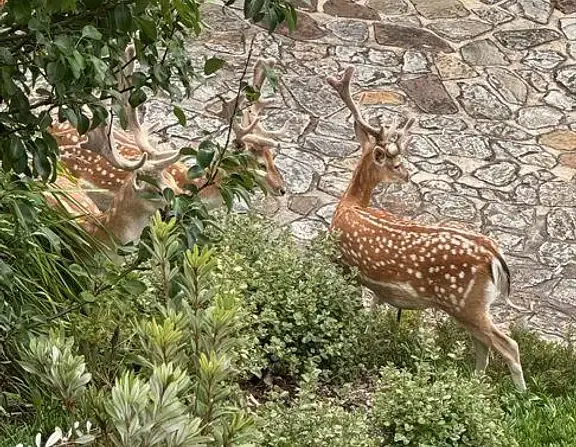
Feral deer negatively impact the environment through the grazing, browsing, trampling, and ringbarking of vegetation, thereby reducing habitat and biodiversity. They also damage watercourses, compete with wildlife for resources and pose direct and indirect risks to threatened flora and fauna. They quickly spread into burnt bushland and browse regrowth, hampering recovery of habitat.
Feral deer impact primary production through damage to pastures, crops, vineyards, orchards and forestry plantations. They also compete with livestock for pasture, damage farm infrastructure and pose a biosecurity risk.
In 2022, feral deer cost the South Australian economy $36 million in agricultural productivity losses. State-wide productivity losses were projected to increase to over $241 million by 2032 without the eradication program (Feral Deer Control Economic Analysis, BDO EconSearch 2023).
The Mount Lofty Ranges is one of 15 biodiversity hotspots in Australia, and is home to many threatened species. Feral deer grazing is contributing to the destruction of habitat for threatened species such as the southern brown bandicoot, making them more vulnerable to predation by foxes and cats.
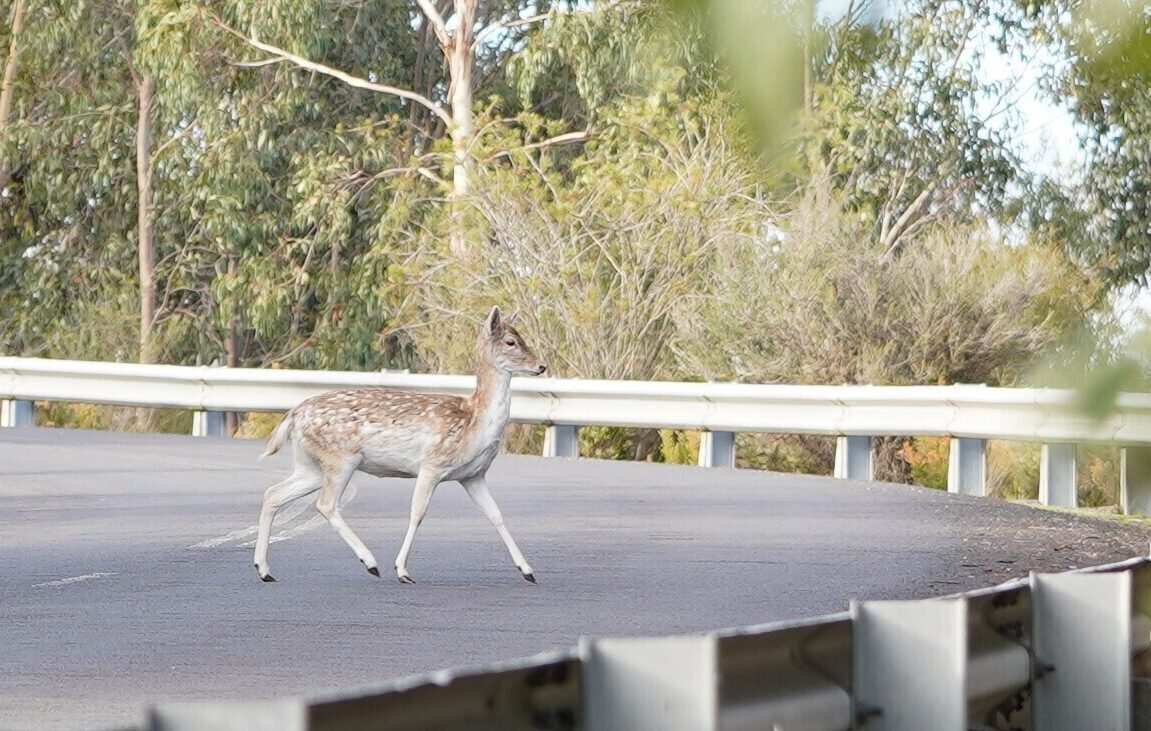
Feral deer are an increasing traffic hazard on peri- urban roads. There have been several incidents where aggressive feral deer have attacked people and caused injuries, while illegal hunting activities that target feral deer threaten public safety.
Feral deer can cause significant damage to private and public gardens, and in some cases damage to houses, ovals, playgrounds and other infrastructure.
Join the feral deer eradication program
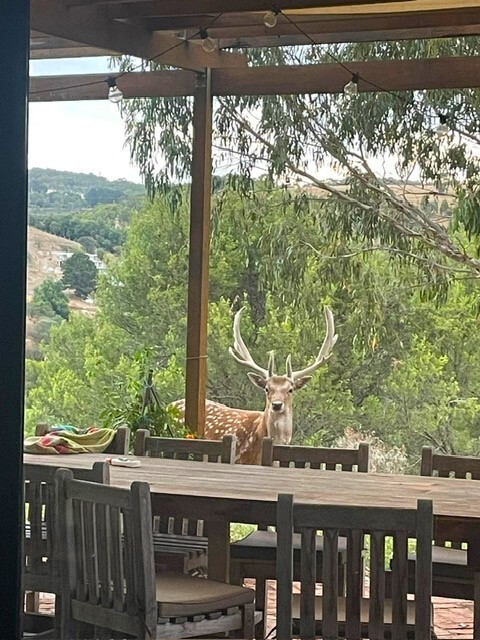
If feral deer are impacting your property we invite you to register your interest to be involved in our coordinated eradication program.
After you register, we will assess whether your property is in a priority area. If it is, we’ll reach out to discuss your involvement. And don’t worry, signing up doesn’t mean you’re locked in, it just shows you’re keen to learn more!
Related news
This program is being delivered in partnership with neighbouring landscape boards and PIRSA (Department of Primary Industries and Regions South Australia), and is partly funded by the Landscape Priority Fund, through the ‘Now or never - controlling feral deer and goats’ project.